Spring Pothole Season: What to Do After Hitting a Pothole in Gatineau
Spring arrives in Gatineau with blooming flowers, warming temperatures, and, unfortunately, one of the most dreaded automotive hazards—pothole season. The freeze-thaw cycles that define Quebec winters wreak havoc on road surfaces, creating craters that can damage your vehicle in an instant. One moment you’re driving down Boulevard Maloney or Autoroute 50, the next you’ve hit a bone-jarring pothole that leaves you wondering if your car is still roadworthy.
Gatineau roads are particularly vulnerable to pothole formation. The city reported filling over 13,000 potholes in a single season, and with spring thaws continuing through March and April, the problem intensifies before it improves. Whether you’re navigating downtown Hull, suburban streets in Aylmer, or rural roads near Chelsea, potholes are an unavoidable reality.
This comprehensive guide explains why spring creates perfect pothole conditions, what damage potholes cause, how to assess your vehicle after impact, and when you need professional assistance. If you’ve hit a pothole and your vehicle is handling strangely or won’t drive safely, call 819-485-0729 for immediate roadside assistance anywhere in Gatineau.
Why Spring is Peak Pothole Season in Gatineau
Understanding why potholes form helps you recognize high-risk conditions and drive more defensively during vulnerable periods.
The Science Behind Pothole Formation
Potholes aren’t random—they’re the predictable result of water, freezing temperatures, and road stress:
- Water infiltration: Rain, melting snow, and spring runoff seep into small cracks in asphalt pavement
- Freeze-thaw expansion: When temperatures drop below freezing (common in Gatineau from November through March), water expands by approximately 9% as it freezes
- Pavement lifting: This expansion pushes the asphalt upward, creating small bumps and further cracking the surface
- Thawing and voids: When temperatures rise, ice melts and water drains away, leaving air pockets and voids beneath the pavement
- Structural weakness: The pavement above these voids has no support, creating weak spots
- Traffic impact: Vehicles driving over weakened sections cause the unsupported asphalt to collapse, forming potholes
- Rapid deterioration: Once a pothole forms, water collects in it, and the freeze-thaw cycle accelerates its growth
Why March and April Are Worst
Spring intensifies pothole formation for several reasons:
- Temperature fluctuations: Days above freezing and nights below freezing create multiple freeze-thaw cycles daily
- Maximum water infiltration: Melting snow and spring rain provide abundant water to seep into road cracks
- Accumulated winter damage: Months of freezing have already weakened road structures
- Delayed repairs: Municipalities can’t permanently patch potholes until consistent warm weather arrives
- Road salt effects: Winter de-icing chemicals further degrade asphalt, accelerating deterioration
This combination makes late March through April the peak period for pothole damage in Gatineau, though potholes can appear from February through May depending on weather patterns.
What Damage Can Potholes Cause?
The severity of pothole damage depends on impact speed, pothole depth, and angle of entry. Here’s what can happen when your vehicle strikes a pothole:
Tire Damage
Tires are the first casualties of pothole impacts:
- Sidewall bulges: Impact forces tire sidewall against the pothole edge, creating bulges that can lead to blowouts
- Tread separation: Severe impacts can separate tread from the tire body
- Punctures: Sharp debris in potholes can puncture tire sidewalls or treads
- Bead damage: The seal between tire and rim can break, causing air leaks
- Internal tire damage: Structural damage to tire cords and belts may not be immediately visible but causes gradual failure
Tire damage from potholes often isn’t immediately obvious. A tire might look fine but develop a slow leak or fail catastrophically days later. Always inspect tires carefully after significant pothole impacts.
Wheel and Rim Damage
The wheels themselves frequently sustain damage:
- Bent rims: Aluminum alloy wheels can bend or crack from hard impacts
- Cracked wheels: Severe impacts fracture wheel structures, requiring immediate replacement
- Damaged finish: Cosmetic damage to wheel surfaces and finishes
- Out-of-round wheels: Deformed wheels cause vibrations and handling issues
Bent or cracked wheels are safety-critical issues. A wheel failure at highway speeds can cause loss of control and serious accidents. If you suspect wheel damage after hitting a pothole and notice vibrations or handling changes, don’t drive—call 819-485-0729 for emergency towing to a repair facility.
Suspension Damage
Your vehicle’s suspension system absorbs road impacts, but potholes can exceed design limits:
- Bent control arms: Lower control arms are particularly vulnerable to pothole damage
- Damaged struts or shocks: Impact forces can damage shock absorbers and strut assemblies
- Broken springs: Coil springs can crack or break from severe impacts
- Ball joint damage: Forces transmitted through ball joints can cause premature wear or failure
- Tie rod damage: Steering tie rods can bend or disconnect
- Sway bar link failure: Stabilizer bar links are common casualties of pothole impacts
Suspension damage compromises vehicle handling and safety. Symptoms include pulling to one side, unusual tire wear, clunking noises over bumps, or poor ride quality.
Alignment Issues
Severe pothole impacts knock wheels out of proper alignment:
- Toe misalignment: Wheels point inward or outward rather than straight ahead
- Camber problems: Wheels tilt inward or outward at the top
- Caster misalignment: Steering axis angle changes, affecting handling
Misalignment causes uneven tire wear, poor handling, vehicle pulling, and reduced fuel economy. After a significant pothole hit, professional alignment service is often necessary.
Undercarriage Damage
Low-clearance vehicles or particularly deep potholes can cause undercarriage damage:
- Oil pan damage: Deep potholes or raised edges can strike and puncture oil pans
- Exhaust system damage: Mufflers, catalytic converters, and exhaust pipes can be dented or separated
- Transmission damage: Transmission pans and components may sustain damage
- Fuel tank damage: In extreme cases, fuel tanks can be dented or punctured
Immediate Actions After Hitting a Pothole
Your response in the moments after a pothole impact affects safety and can prevent additional damage.
Step 1: Safely Pull Over When Possible
If traffic and road conditions permit, pull over to a safe location to assess damage. However, don’t create additional hazards—if you’re on a busy highway like Autoroute 50, continue to the nearest safe exit or rest area rather than stopping on the shoulder.
Step 2: Check for Immediate Safety Issues
Before exiting the vehicle, assess whether it’s safe to continue driving:
- Warning lights: Did any dashboard warning lights illuminate after impact?
- Handling changes: Does the vehicle pull to one side or feel unstable?
- Noises: Do you hear grinding, scraping, or thumping sounds?
- Vibrations: Is there unusual vibration through the steering wheel or vehicle body?
- Tire pressure warnings: Did the tire pressure monitoring system activate?
If you notice any of these issues, the vehicle may not be safe to drive. Call 819-485-0729 for professional assessment and potential towing rather than risking further damage or an accident.
Step 3: Visual Inspection
If safe to do so, exit the vehicle and conduct a visual inspection:
Tire Inspection:
- Look for visible damage—cuts, bulges, or separated tread
- Check tire pressure if you have a gauge
- Inspect for objects embedded in the tire
- Look at the sidewall for cracks or bubbles
Wheel Inspection:
- Check for visible bends or cracks in the rim
- Look for damage to the wheel finish
- Ensure the wheel is still properly attached (check lug nuts)
Undercarriage Quick Check:
- Look underneath for hanging components
- Check for fluid leaks (oil, coolant, fuel)
- Listen for hissing sounds indicating air leaks
Step 4: Decide Whether to Drive
Based on your inspection, make an informed decision:
Safe to Continue (with caution):
- No visible tire or wheel damage
- No warning lights illuminated
- Vehicle handles normally without pulling or vibration
- No unusual noises
- No fluid leaks
If everything seems normal, you can likely continue driving, but schedule a professional inspection soon—internal damage isn’t always immediately apparent.
Not Safe to Drive—Call for Towing:
- Flat tire or rapid air loss
- Visible wheel damage (bends, cracks)
- Severe vibration or pulling
- Grinding or scraping noises
- Fluid leaks underneath
- Warning lights on dashboard
- Any uncertainty about safety
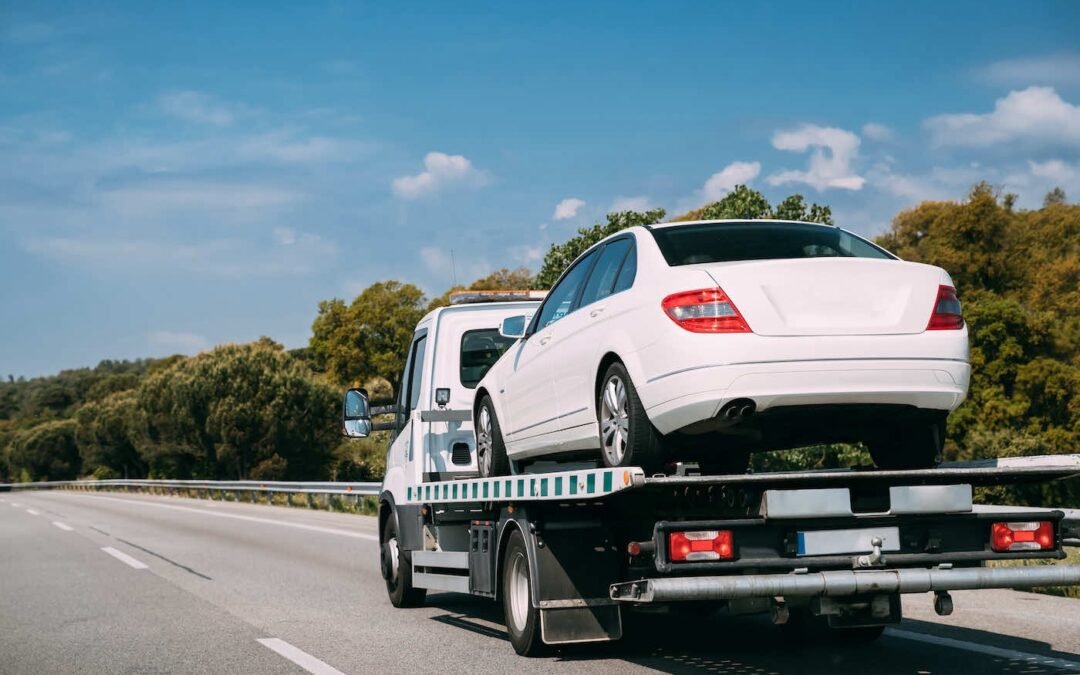
Don’t risk driving a damaged vehicle. Our flatbed towing service safely transports your vehicle to a repair shop without causing additional damage. Call 819-485-0729 for immediate assistance.
Professional Inspection After Pothole Damage
Even if your vehicle seems fine after a pothole impact, professional inspection is wise, especially after particularly hard hits.
What Mechanics Check
A comprehensive post-pothole inspection includes:
- Tire inspection: Internal and external damage assessment, including dismounting tires for thorough examination
- Wheel integrity: Checking for bends, cracks, and structural damage
- Suspension components: Inspecting control arms, ball joints, tie rods, struts, and bushings
- Alignment: Measuring and adjusting wheel alignment to factory specifications
- Steering system: Checking for play, damage, or looseness
- Undercarriage: Inspecting for damage to exhaust, oil pan, and other vulnerable components
- Brake system: Verifying brake components weren’t damaged by impact forces
Typical Inspection Costs
Professional pothole damage inspections typically cost $50-100, a small investment compared to the cost of undiagnosed damage causing failure later. Many shops offer free visual inspections if you’re getting repairs done.
Common Pothole Damage Repairs and Costs
Understanding typical repair costs helps you budget and make informed decisions.
Tire Replacement
- Single tire: $100-300 depending on size and quality
- Pair replacement: $200-600 (recommended to replace both tires on same axle)
- Note: Tire damage from potholes is often NOT covered by tire warranties
Wheel Repair or Replacement
- Alloy wheel straightening: $75-150 per wheel (if minor bending, no cracks)
- Steel wheel replacement: $50-150 per wheel
- Alloy wheel replacement: $150-500+ per wheel depending on vehicle
- Luxury/specialty wheels: $500-1,500+ per wheel
Suspension Repairs
- Shock/strut replacement: $300-800 per pair
- Control arm replacement: $200-600 per side
- Ball joint replacement: $150-400 per joint
- Tie rod replacement: $100-300 per side
- Sway bar link: $75-200 per side
Alignment Service
- Standard alignment: $80-150
- Four-wheel alignment: $100-200
Undercarriage Damage
- Exhaust repair: $100-500 depending on damage
- Oil pan replacement: $300-800
- Transmission pan: $250-600
Total pothole damage repair costs commonly range from $200 for minor tire damage to $2,000+ for multiple damaged components requiring replacement.
Can You Claim Pothole Damage from the City?
Many drivers wonder if they can recover repair costs from the municipality responsible for road maintenance.
Filing a Claim with Ville de Gatineau
The City of Gatineau does accept damage claims for pothole-related vehicle damage, but success is not guaranteed. The city has legal defenses that limit liability.
Gatineau’s Legal Position
According to Quebec municipal law, cities benefit from immunity regarding damages caused by road surface conditions including potholes, specifically for:
- Tire damage
- Suspension system damage
- Damage caused by the state of the roadway
However, the city may be held liable if:
- The pothole was reported and not repaired within a reasonable timeframe
- The pothole constituted an obvious, extreme hazard that the city had constructive knowledge of
- The city’s road maintenance program was grossly negligent
How to File a Claim
If you wish to file a claim despite the challenges:
- Document the damage: Photograph your vehicle damage from multiple angles
- Document the pothole: Return to the location (safely) and photograph the pothole with measurements if possible
- Get repair estimates: Obtain written quotes from mechanics detailing damage and costs
- Complete claim form: Download and fill out Gatineau’s claim form (available on ville.gatineau.qc.ca)
- Submit within 15 days: Claims must be filed within 15 days of the incident
- Include all documentation: Photos, repair estimates, incident details
Realistic Expectations
Most pothole damage claims against municipalities are denied due to legal immunity provisions. However, filing costs nothing, and in rare cases where the city was demonstrably negligent, claims may be paid. Don’t count on reimbursement, but filing ensures your incident is documented.
Insurance Claims
Your auto insurance may cover pothole damage under collision coverage (if you have it). However, making a claim means paying your deductible and potentially facing rate increases. For minor damage under $1,000, many drivers choose to pay out of pocket rather than claim.
Check with your insurer about coverage options. Some policies have specific provisions for road hazard damage. Our insurance towing services work directly with insurance companies to streamline the claims process if you need towing after pothole damage.
How to Avoid Pothole Damage
While you can’t eliminate pothole risk in Gatineau during spring, defensive driving reduces the likelihood and severity of impacts.
Driving Strategies
- Slow down: Reduce speed on roads known for potholes, especially in spring
- Increase following distance: Extra space gives you more reaction time to avoid potholes
- Watch ahead: Look well down the road, not just at the pavement immediately in front
- Learn problem areas: Note pothole locations on your regular routes and avoid them
- Avoid puddles: Water-filled potholes hide their depth—what looks shallow may be dangerously deep
- Don’t swerve dangerously: Avoiding potholes is good, but not if it means swerving into traffic or losing control
- Grip steering firmly: If you must hit a pothole, maintain firm steering control to prevent wheel jerk
- Release brakes before impact: Braking during impact increases suspension compression and damage; brake before, then release just before hitting
Vehicle Maintenance
- Maintain proper tire pressure: Underinflated tires are more vulnerable to pothole damage
- Inspect tires regularly: Worn tires with low tread are more susceptible to damage
- Keep suspension in good condition: Worn shocks and struts can’t absorb impacts effectively
- Replace aging tires: Old tires with hardened rubber are more likely to crack or fail
Route Planning
- Use apps like Waze that crowdsource pothole locations
- Choose highways and major roads when possible—they’re typically better maintained
- Avoid roads under construction or recently patched (patches often create uneven surfaces)
- In Buckingham, Masson-Angers, and rural areas, be especially cautious on older roads with known poor conditions
Report Potholes to Help Everyone
Reporting potholes helps the city prioritize repairs and warns other drivers.
How to Report Potholes in Gatineau
- Call 311: The city’s service request line (819-243-2345 outside Gatineau)
- Online form: Submit reports through ville.gatineau.qc.ca
- Provide details: Exact location, approximate size, whether it’s creating immediate danger
The city uses reports to prioritize pothole repairs, with dangerous potholes receiving priority attention. Your report might prevent other drivers from sustaining damage.
When Pothole Damage Leaves You Stranded
Sometimes pothole damage is severe enough to make driving unsafe or impossible.
Signs You Need Towing
- Flat tire with no spare or unable to change it safely
- Wheel damage preventing safe driving
- Severe suspension damage causing handling problems
- Fluid leaks creating immediate hazards
- Vehicle pulling so severely it can’t be controlled
- Dashboard warning lights indicating critical system failures
If pothole damage has left you stranded on the side of the road in Gatineau Sector, along Autoroute 50, or anywhere in the region, we provide rapid response towing to get you and your vehicle to safety.
What We Provide
- 24/7 availability: Potholes don’t respect business hours—neither do we
- Rapid response: Typical arrival time 20-30 minutes across Gatineau
- Proper equipment: Flatbed trucks and wheel-lift options to suit damage type
- Professional operators: Experienced drivers who understand vehicle damage and safe loading
- Destination choice: Tow to your preferred mechanic, dealership, or home
- Insurance coordination: We work with insurance companies for seamless claims
Our tire change service can also help if you have a spare tire but can’t safely change it yourself due to traffic, weather, or physical limitations.
Frequently Asked Questions
How do I know if pothole damage is serious?
Serious damage manifests as pulling to one side, vibration, unusual noises, warning lights, or visible tire/wheel damage. If you notice any of these symptoms after a pothole impact, have your vehicle inspected professionally. When in doubt, call 819-485-0729 for assessment.
Can I drive on a tire damaged by a pothole?
It depends on the damage. Small sidewall scuffs might be cosmetic, but bulges, cuts, or punctures make driving dangerous. Tire failures at speed cause loss of control and accidents. If you’re unsure, don’t drive—call for towing to a tire shop for professional evaluation.
Will my insurance cover pothole damage?
Collision coverage typically covers pothole damage, but you’ll pay your deductible and potentially face rate increases. Check your policy or call your insurer to confirm coverage. Comprehensive coverage generally does NOT cover pothole damage (it’s considered collision, not comprehensive).
How long does Gatineau take to fill reported potholes?
The city prioritizes dangerous potholes for repair within days. Less severe potholes may take weeks depending on weather, crew availability, and overall workload. Permanent repairs require warmer temperatures, so early spring patches may be temporary cold-mix asphalt.
Should I get an alignment after hitting a pothole?
If you hit a particularly severe pothole at speed, yes—alignment check is wise. Even if handling seems normal, pothole impacts can knock alignment out of specification, causing uneven tire wear. Alignment checks typically cost $50-80 and can save hundreds in premature tire replacement.
What’s the best way to hit a pothole if I can’t avoid it?
Slow down as much as safely possible before impact, then release brakes just before hitting. Keep steering wheel straight and grip firmly. This minimizes suspension compression during impact and prevents the pothole from jerking the steering wheel from your hands.
Do you provide roadside tire changes after pothole damage?
Yes, our roadside assistance includes professional tire changing. If you have a spare tire but can’t or don’t want to change it yourself—especially in traffic or bad weather—we’ll come to your location and handle it safely.
Don’t Let Pothole Damage Ruin Your Day
Spring pothole season in Gatineau is an unavoidable reality, but knowing how to respond to pothole damage protects your safety and minimizes repair costs. Whether you’ve just hit a pothole and need immediate assessment, require towing to a repair facility, or need professional tire changing services, Gatineau Towing is ready to help.
We understand that pothole damage often happens unexpectedly and at the worst times. Our 24/7 service ensures you’re never stranded, whether you’re dealing with a flat tire on Autoroute 50, bent wheels in Old Gatineau, or suspension damage on rural roads near Cantley.
Hit a pothole and need help? Call 819-485-0729 right now for immediate assistance anywhere in Gatineau.
Our comprehensive services include:
- Emergency breakdown towing
- Flatbed towing for damaged vehicles
- Roadside tire change service
- 24/7 roadside assistance
- Accident recovery
- Winching and recovery
- Long-distance towing
- Car unlocking service
Available 24/7 across Hull, Aylmer, Buckingham, Chelsea, Cantley, Gatineau Sector, Masson-Angers, and all surrounding communities. When potholes strike, we’re ready to help.