Motorcycle Towing in Gatineau: Complete Spring Preparation Guide
Spring in Gatineau means one thing for motorcycle enthusiasts—the riding season is finally here. After months of winter storage, your bike is ready to hit the roads along the Ottawa River, cruise through the Gatineau Hills, or explore scenic routes toward Chelsea and Cantley. But before you fire up that engine, your motorcycle needs proper spring preparation to ensure safety, performance, and reliability after sitting dormant through Quebec’s harsh winter.
This comprehensive guide covers everything you need to know about getting your motorcycle road-ready for spring, from essential maintenance checks to safely transporting your bike to mechanics or storage facilities. We’ll also explain when you need professional motorcycle towing services and how specialized transport protects your investment from damage.
Need to transport your motorcycle to a shop for spring service or bring it home from storage? Call 819-485-0729 for professional, damage-free motorcycle towing anywhere in Gatineau.
Why Spring Preparation Matters
Unlike cars that run year-round, motorcycles often sit unused for 4-6 months during Gatineau winters. This extended dormancy creates unique challenges that can compromise safety and performance if not properly addressed.
What Happens During Winter Storage
Even in the best storage conditions, motorcycles experience changes during winter:
- Fuel degradation: Gasoline breaks down, creating varnish deposits that clog fuel systems
- Battery discharge: Batteries slowly lose charge, potentially sulfating and permanently losing capacity
- Tire flat spots: Prolonged pressure on one section creates temporary or permanent flat areas
- Seal drying: Rubber seals and gaskets can dry out without regular lubrication from engine operation
- Corrosion: Moisture and temperature fluctuations cause rust on exposed metal parts
- Fluid settling: Oil, brake fluid, and coolant can settle or separate
- Cable stiffness: Control cables may stiffen without regular movement
Proper spring preparation identifies and corrects these issues before you ride, preventing breakdowns, accidents, or expensive repairs down the road.
Complete Spring Motorcycle Preparation Checklist
Follow this systematic approach to ensure your motorcycle is road-ready and safe for the riding season.
Step 1: Visual Inspection
Before touching any mechanical components, conduct a thorough visual inspection of your entire motorcycle.
What to Look For
- Frame and body: Check for cracks, damage, or corrosion on the frame, fairings, and body panels
- Fluid leaks: Look under the bike for oil, coolant, or brake fluid puddles indicating seal failures
- Pest damage: Mice and other rodents may have nested in air boxes, exhausts, or storage compartments
- Rust and corrosion: Inspect chrome, bolts, chains, and exposed metal for rust
- Tire condition: Look for cracks, dry rot, or visible damage
- Control cables: Check for fraying, kinks, or corrosion
- Fasteners: Ensure bolts, nuts, and screws are tight and haven’t loosened
If you discover significant damage, pest infestation, or major issues during inspection, consider using professional motorcycle towing to transport your bike to a qualified mechanic rather than attempting to ride it.
Step 2: Battery Check and Charge
The battery is often the first component requiring attention after winter storage.
Battery Inspection
- Visual check: Look for corrosion on terminals, cracks in the case, or bulging (indicates internal damage)
- Clean terminals: Remove corrosion using a wire brush and baking soda solution
- Test voltage: Use a multimeter—a healthy 12V battery should read 12.4-12.7V when fully charged
- Load test: If voltage is good, perform a load test to verify the battery can deliver adequate current
Charging Protocol
- Use a motorcycle-specific battery charger or tender
- Charge slowly (trickle charge) rather than fast charging for better battery health
- If the battery won’t hold a charge or shows less than 12V after charging, replacement is needed
- Consider a lithium battery upgrade for better cold-weather performance and longer life
Dead batteries are common after winter storage. If your battery won’t charge and you need to transport your bike to purchase a replacement, our towing service ensures safe transport without risking a dead battery during the trip.
Step 3: Fuel System Service
The fuel system requires special attention after extended storage, especially if you didn’t properly prepare the bike last fall.
Fuel Inspection and Treatment
- Check fuel condition: Old gas smells varnish-like and may appear darker than fresh fuel
- Drain old fuel: If fuel is more than 6 months old, drain the tank completely
- Add fresh fuel: Fill with fresh premium gasoline (higher octane resists degradation)
- Fuel stabilizer: Add stabilizer even to fresh fuel to prevent quick degradation
- Check for varnish: Inspect inside the tank with a flashlight for varnish buildup
- Prime the system: Turn the ignition on (don’t start) several times to allow the fuel pump to prime
Carburetor Cleaning (If Applicable)
Older motorcycles with carburetors are especially vulnerable to fuel varnish:
- Remove and inspect carburetor jets and passages
- Use carburetor cleaner spray to remove deposits
- Consider professional carburetor service if DIY cleaning doesn’t resolve issues
Fuel system problems can prevent your bike from running. If you need carburetor service but can’t ride to a shop, emergency towing gets your motorcycle to qualified technicians safely.
Step 4: Oil and Filter Change
Fresh oil is critical after winter storage, even if you changed it before storing the bike.
Why Change Oil After Storage
- Oil sitting unused can collect condensation moisture
- Additives in oil can separate or degrade over time
- Fresh oil ensures proper lubrication for the first critical start-up
Oil Change Process
- Warm the engine: If the bike starts, run it briefly (2-3 minutes) to warm oil for easier draining
- Drain old oil: Remove drain plug and let oil fully evacuate
- Replace oil filter: Install a new oil filter
- Refill with fresh oil: Use manufacturer-recommended weight and type
- Check level: Ensure proper oil level after filling
- Inspect for leaks: Run engine briefly and check for leaks around drain plug and filter
Step 5: Tire Inspection and Pressure
Tires are your only contact with the road—their condition is safety-critical.
Tire Condition Assessment
- Tread depth: Check that tread meets minimum legal depth (1.6mm in Quebec) and safety standards (3mm+ recommended)
- Dry rot: Look for cracks, especially in sidewalls—a sign tires need replacement
- Flat spots: Inspect for areas where tire sat on ground all winter creating flat sections
- Punctures or damage: Check for embedded debris, cuts, or bulges
- Age: Even with good tread, tires over 5-6 years old should be replaced
Tire Pressure
- Tires lose 1-2 PSI per month during storage
- Inflate to manufacturer-recommended pressure (found in owner’s manual or frame sticker)
- Check pressure when tires are cold for accurate readings
- Don’t forget to check the spare if your bike carries one
If tire inspection reveals damage requiring immediate replacement and your bike isn’t safe to ride, we provide flatbed towing to get your motorcycle to a tire shop safely.
Step 6: Brake System Check
Brakes are your primary safety system—never compromise on brake condition.
Brake Inspection Points
- Brake fluid level: Check reservoir levels for front and rear brakes
- Fluid condition: Brake fluid should be clear/light amber; dark or contaminated fluid needs replacement
- Brake pads: Inspect pad thickness—replace if less than 2-3mm remains
- Brake lines: Check for cracks, bulges, or leaks in brake lines
- Disc condition: Inspect rotors for excessive wear, warping, or scoring
- Brake feel: Test lever/pedal—should be firm, not spongy
Brake Bleeding
If brakes feel spongy after winter storage, air may have entered the system. Brake bleeding removes air bubbles and restores firm brake feel. This is a critical safety procedure—if you’re not confident performing it, have a professional mechanic handle brake service.
Step 7: Chain, Belt, or Shaft Drive Maintenance
Your motorcycle’s drive system needs attention after sitting idle.
Chain Drive Maintenance
- Clean the chain: Use chain cleaner to remove old lubricant and dirt
- Inspect for wear: Check for tight spots, kinks, or damaged links
- Check tension: Ensure proper slack according to manufacturer specs (usually 25-35mm)
- Lubricate: Apply fresh chain lube to clean, dry chain
- Inspect sprockets: Look for worn or damaged teeth
Belt Drive Inspection
- Check belt tension according to specifications
- Inspect for cracks, fraying, or missing teeth
- Look for unusual wear patterns indicating alignment issues
Shaft Drive Check
- Verify proper fluid level in shaft housing
- Check for leaks around seals
- Inspect for play in universal joints
Step 8: Control Cables and Lubrication
Throttle, clutch, and brake cables can stiffen during winter storage.
Cable Maintenance
- Inspect cables: Look for fraying, kinks, or corrosion
- Test operation: Ensure smooth movement without binding
- Lubricate: Apply cable lubricant to clutch and throttle cables
- Adjust as needed: Ensure proper free play according to specifications
General Lubrication Points
- Kickstand pivot
- Footpeg pivots
- Lever pivots (brake and clutch)
- Steering head bearings (check for play and smoothness)
Step 9: Electrical System and Lights
Verify all electrical systems function properly before riding.
Lighting Check
- Headlight: Test high and low beam
- Tail light: Verify operation
- Brake light: Test front and rear brake activation
- Turn signals: Confirm all four signals work and flash at correct rate
- Running lights: Check position lights and marker lights
- Dashboard lights: Ensure all gauges and warning lights illuminate
Electrical Component Testing
- Horn functionality
- Kill switch operation
- Starter button
- Neutral light and other indicators
Electrical gremlins can leave you stranded. If your bike won’t start due to electrical issues and you need professional diagnosis, our roadside assistance can transport it to a shop specializing in motorcycle electrical systems.
Step 10: Coolant Check (Liquid-Cooled Bikes)
If your motorcycle has liquid cooling, the coolant system needs inspection.
Coolant Inspection
- Check coolant level in reservoir when engine is cold
- Inspect coolant condition—should be bright colored, not rusty or contaminated
- Look for leaks around hoses, radiator, and water pump
- Test radiator cap seal
- Check hose condition for cracks or soft spots
Coolant should be changed every 2-3 years. If it’s due, spring is the perfect time for fresh coolant before the riding season.
Step 11: Air Filter Inspection
A clean air filter ensures proper engine performance and fuel economy.
Air Filter Service
- Remove air filter according to your bike’s service manual
- Inspect for dirt, debris, or pest nesting materials
- Paper filters: Replace if dirty; cannot be cleaned effectively
- Foam filters: Wash with mild soap, let dry completely, re-oil with filter oil
- K&N-style filters: Clean according to manufacturer instructions
Step 12: Test Ride and Final Checks
After completing all maintenance, perform a careful test ride.
Pre-Ride Safety Check
- Walk around the bike checking for loose parts or leaks
- Ensure mirrors are adjusted properly
- Test all controls while stationary
- Check tire pressure one final time
Initial Test Ride
- Start in a safe, low-traffic area like an empty parking lot
- Take it easy—your riding skills may be rusty after winter
- Test brakes at low speed before entering traffic
- Listen for unusual noises
- Feel for vibrations or handling issues
- Gradually increase speed as confidence returns
If you notice problems during the test ride, don’t risk riding further. Call 819-485-0729 for safe transport to a qualified motorcycle mechanic in Hull, Aylmer, or your preferred location.
When You Need Professional Motorcycle Towing
Sometimes spring preparation reveals issues requiring professional service, or you simply need to transport your motorcycle safely. Here are common situations requiring towing:
Common Towing Scenarios
- Non-starting motorcycle: Battery, fuel, or electrical issues prevent starting
- Mechanical failures discovered: Spring inspection reveals problems requiring shop service
- Tire replacement needed: Unsafe tires that can’t be ridden on
- Brake system failures: Spongy brakes or fluid leaks make riding dangerous
- Transport from/to storage: Moving bike between home and storage facilities
- Accident damage: Collision or tip-over requiring accident recovery
- Purchase transport: Bringing home a newly purchased motorcycle
- Long-distance moves: Relocating your bike across provinces using long-distance towing
How Professional Motorcycle Towing Works
Unlike car towing, motorcycles require specialized equipment and techniques to prevent damage during transport.
Proper Motorcycle Transport Methods
Flatbed Towing (Preferred Method)
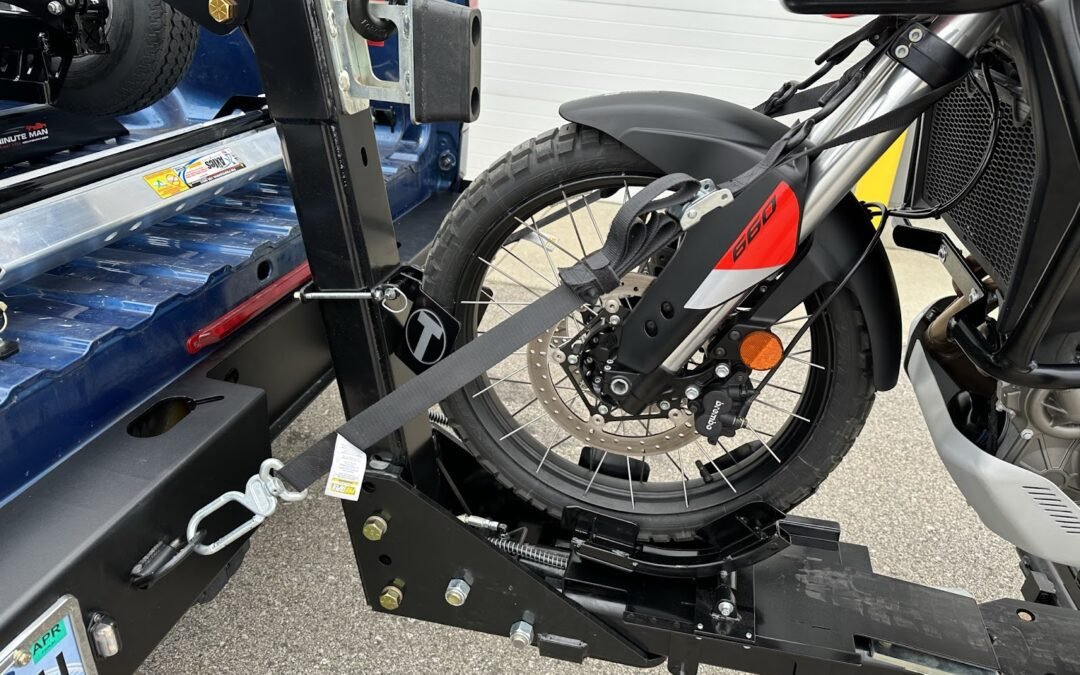
- Motorcycle is secured upright on a flatbed truck
- Wheel chocks prevent forward/backward movement
- Soft tie-down straps attach to frame (never handlebars alone)
- Front suspension compressed slightly to stabilize bike
- Multiple attachment points distribute force evenly
Why Flatbed is Best
- Zero road contact means no tire wear or suspension stress
- Protected from weather and road debris
- Suitable for any motorcycle condition (running or not, wheels functional or seized)
- No risk of damage from improper towing angle
What to Avoid
Never accept these improper towing methods:
- Wheel-lift towing: Damages motorcycle suspension and bodywork
- Dolly towing: Unstable and dangerous for motorcycles
- Riding alongside tow vehicle: Illegal and extremely dangerous
- Chain tie-downs: Scratch and damage motorcycle finish
Professional Towing Process
- Call for service: Contact 819-485-0729 with your location and bike details
- Quote provided: Transparent pricing based on distance and service type
- Dispatch: Flatbed truck with proper equipment sent to your location
- Professional loading: Experienced operator secures bike safely
- Safe transport: Careful driving protects your motorcycle
- Delivery: Unloaded safely at your destination
Motorcycle Towing Costs in Gatineau
Understanding fair pricing helps you budget for motorcycle transport needs.
Typical Pricing Structure
- Base rate: $100-150 for pickup and first 5-10 km
- Per kilometer charge: $3-5 per km beyond base distance
- After-hours premium: Some companies charge 20-30% more for night/weekend service (we don’t)
- Specialty bikes: Large touring bikes or trikes may cost slightly more
Cost Examples
- Towing from Buckingham to Hull shop (15 km): ~$120-160
- Transport from storage facility in Masson-Angers to home in Aylmer (25 km): ~$150-200
- Emergency roadside pickup and tow to nearest shop (10 km): ~$120-150
Spring Riding Safety Tips
Even with a perfectly prepared motorcycle, early-season riding requires extra caution.
Road Conditions in Spring
Gatineau roads present unique spring challenges:
- Potholes: Winter freeze-thaw cycles create crater-sized potholes—avoid or slow significantly
- Gravel and sand: Winter traction materials linger on roads, reducing grip
- Wet pavement: Spring rain makes roads slippery, especially at intersections
- Temperature swings: Morning frost can create icy patches even when afternoons are warm
- Wildlife: Deer and other animals are more active in spring—extra vigilance needed on rural roads
Rider Readiness
Your skills are rusty after winter—acknowledge this and ride accordingly:
- Start with short, easy rides in familiar areas
- Gradually rebuild confidence and muscle memory
- Practice emergency braking and swerving in safe areas
- Wear full protective gear from day one
- Avoid aggressive riding until skills return
Gear and Equipment Check
Your riding gear also needs spring preparation.
Helmet Inspection
- Check for cracks, damage, or degraded foam
- Replace helmets older than 5 years or after any impact
- Clean visor and ensure it operates smoothly
- Check retention strap for wear
Riding Gear Assessment
- Inspect jackets, pants, and gloves for tears or damage
- Verify armor inserts are properly positioned and undamaged
- Check boot condition and sole wear
- Test zippers and closures
Insurance and Registration
Don’t forget the legal requirements before hitting the road.
Insurance Reactivation
If you suspended insurance for winter (common in Quebec), contact your insurer to reactivate coverage before riding. Riding without insurance is illegal and leaves you financially vulnerable.
Registration and Licensing
- Verify your motorcycle registration is current
- Ensure your motorcycle license hasn’t expired
- Attach current registration sticker
- Carry registration and insurance documents
Frequently Asked Questions
How much does motorcycle towing cost in Gatineau?
Typical costs range from $100-200 depending on distance. Local towing within Gatineau averages $120-160. Call 819-485-0729 for an exact quote based on your specific pickup and delivery locations.
Can you tow motorcycles that don’t run?
Absolutely. Our flatbed towing handles non-running, non-rolling, and even severely damaged motorcycles. Whether your bike won’t start after winter or has mechanical failures, we safely load and transport it.
How long does spring motorcycle preparation take?
Plan for 3-5 hours for thorough DIY preparation. If you’re doing your first spring prep, allow extra time. Professional shops typically charge 2-3 hours labor for comprehensive spring service.
Do you tow all motorcycle types?
Yes. We transport sport bikes, cruisers, touring motorcycles, dirt bikes, scooters, and three-wheelers. Our equipment accommodates bikes from small 125cc scooters to large touring bikes and trikes.
Should I change oil even if I did it before winter storage?
Yes. Oil can collect moisture during storage, and fresh oil ensures optimal lubrication for that critical first start. The cost of an oil change is trivial compared to potential engine damage from contaminated oil.
Can I ride my motorcycle to the shop if it has minor issues?
It depends on the issue. Minor cosmetic problems are fine, but never ride with brake problems, tire damage, handling issues, or anything affecting safety. When in doubt, call for professional towing rather than risk an accident.
Do you service rural areas around Gatineau?
Yes, we provide motorcycle towing across all Gatineau areas including Chelsea, Cantley, Buckingham, Old Gatineau, and Limbour.
Get Your Bike Road-Ready This Spring
Spring motorcycle preparation is essential for safety, performance, and enjoyment throughout the riding season. By following this comprehensive checklist, you ensure your bike is mechanically sound and ready for thousands of kilometers of safe riding through Gatineau and beyond.
When spring preparation reveals issues requiring professional service, or you need safe transport between locations, Gatineau Towing provides specialized motorcycle towing using proper flatbed equipment and experienced operators who understand the unique requirements of motorcycle transport.
Need professional motorcycle towing anywhere in Gatineau? Call 819-485-0729 for safe, damage-free transport 24/7.
Beyond motorcycle towing, we provide comprehensive services including:
- Emergency breakdown towing for all vehicles
- Flatbed towing for cars and motorcycles
- Accident recovery services
- Long-distance vehicle transport
- 24/7 roadside assistance
- Car unlocking service
- Scrap car removal
Ride safe this spring, and remember—we’re here whenever you need professional motorcycle transport across Gatineau and surrounding areas.