Flatbed vs Wheel-Lift Towing: Which is Better for Your Vehicle?
When your vehicle breaks down or you’re involved in an accident, one of the most important decisions isn’t just which towing company to call—it’s which towing method will keep your vehicle safe. The wrong towing approach can cause thousands of dollars in transmission damage, scratch your paint, or compromise your all-wheel-drive system. Understanding the difference between flatbed and wheel-lift towing helps you make the right choice for your specific vehicle and situation.
While both methods safely transport vehicles, they work very differently and suit different scenarios. Flatbed towing lifts your entire vehicle onto a flat platform, while wheel-lift towing raises either the front or rear wheels off the ground with the other wheels rolling on the road. Each has distinct advantages, limitations, and ideal use cases for breakdown towing situations across Gatineau.
If you need towing service right now and want expert advice on the best method for your vehicle, call 819-485-0729. We’ll recommend the safest, most cost-effective option for your specific situation anywhere in Gatineau.
What is Flatbed Towing?
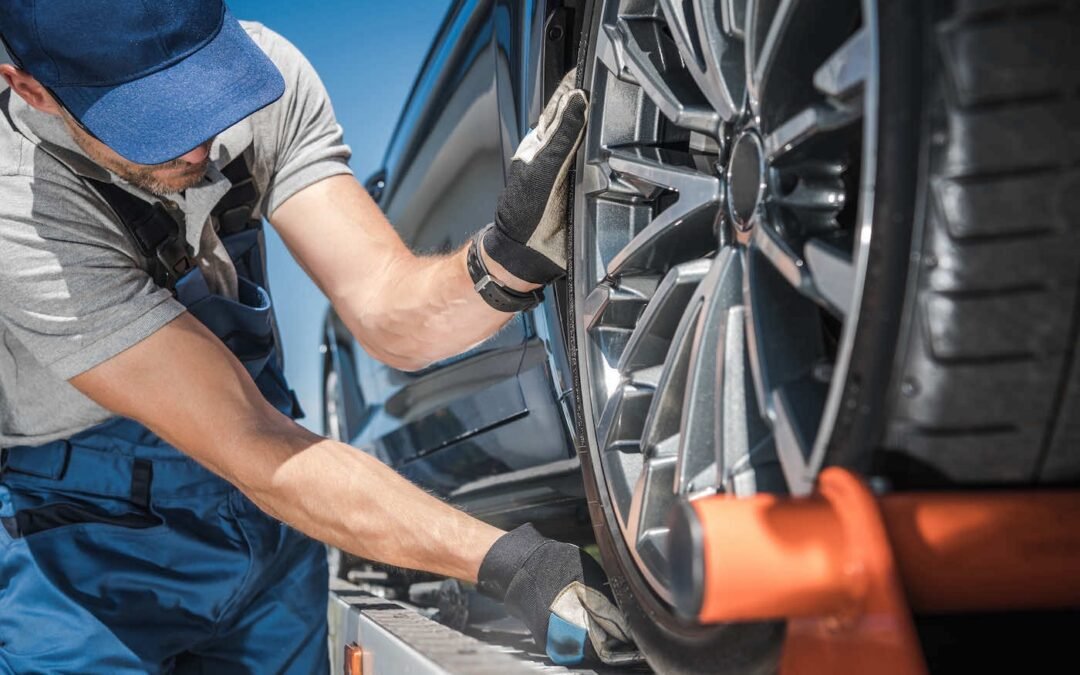
Flatbed towing uses a specialized truck with a long, flat bed that tilts hydraulically to ground level. Your vehicle is either driven or winched onto this platform, then secured with chains or straps. Once loaded, the bed returns to its horizontal position, and your vehicle rides completely off the ground during transport—making it the preferred method for accident recovery and high-value vehicles.
How Flatbed Towing Works
- Bed positioning: The flatbed tilts down to create a ramp from ground to truck bed
- Loading the vehicle: If drivable, the car is driven onto the bed; if disabled, a winch service pulls it up
- Securing: Heavy-duty chains or straps attach to the vehicle’s frame at manufacturer-approved tow points
- Bed leveling: The hydraulic system raises the bed back to horizontal position
- Transport: All four wheels remain stationary and off the road throughout the journey
- Unloading: The process reverses at the destination
This method provides maximum protection because your vehicle experiences no road contact, tire wear, or drivetrain stress during transport—essential for long distance towing across Quebec.
Advantages of Flatbed Towing
Complete Vehicle Protection
With all four wheels off the ground, there’s zero risk of drivetrain damage, transmission wear, or tire stress. Your vehicle is essentially a stationary object during transport, experiencing no more wear than it would sitting in your driveway. This makes flatbed the safest choice for emergency situations.
Perfect for All-Wheel and Four-Wheel Drive Vehicles
AWD and 4WD systems connect all wheels to the transmission. Towing these vehicles with any wheels rolling on the road can cause catastrophic transmission damage within just a few kilometers. Professional flatbed towing eliminates this risk entirely, making it the only safe option for AWD/4WD vehicles in Gatineau.
Ideal for Luxury and Classic Vehicles
High-value vehicles, classic cars, exotic sports cars, and custom builds deserve extra protection. Flatbed towing prevents paint scratches, undercarriage scraping, and ensures these valuable vehicles arrive in pristine condition at your chosen repair shop.
Best for Long-Distance Transport
Whether you’re moving from Gatineau to Montreal or shipping a vehicle across provinces, long distance services using flatbed trucks provide stability and protection over hundreds of kilometers. No rolling wheels means no accumulated wear from extended road contact.
Safe for Severely Damaged Vehicles
After accidents, vehicles often have broken axles, damaged wheels, or compromised suspension. Flatbed towing safely transports these vehicles regardless of their mechanical condition because the truck does all the work—critical for roadside emergencies.
Protects Low-Clearance Vehicles
Sports cars, lowered vehicles, and cars with body kits require careful handling. Flatbed operators use ramps and wood blocks to prevent undercarriage scraping during loading.
Disadvantages of Flatbed Towing
Higher Cost
Flatbed towing typically costs $20-50 more than wheel-lift towing for the same distance. The specialized equipment, longer loading time, and greater fuel consumption contribute to higher pricing. However, this premium often proves worthwhile for the extra protection, especially when using insurance towing services.
Size Limitations
Flatbed trucks are large—often 7-8 meters long with the bed extended. This size makes them challenging in tight parking garages, narrow driveways, or crowded urban areas. Some locations in downtown Hull or Old Gatineau simply can’t accommodate a flatbed truck.
Slower Loading Process
Tilting the bed, positioning the vehicle, winching if necessary, securing with multiple attachment points, and leveling the bed takes 10-20 minutes. Wheel-lift towing can be accomplished in 5-10 minutes for urgent emergency situations.
Weather-Dependent Loading
Steep icy ramps during Gatineau winters can make flatbed loading tricky. Operators need extra care and sometimes additional equipment to safely load vehicles in slippery conditions common in areas like Chelsea and Cantley.
What is Wheel-Lift Towing?
Wheel-lift towing uses a hydraulic boom and metal yoke to lift either the front or rear wheels of your vehicle off the ground. The other end remains on the road, with those wheels rolling during transport. This method evolved from older hook-and-chain towing but uses a safer cradle system for modern emergency calls.
How Wheel-Lift Towing Works
- Positioning: The tow truck backs up to your vehicle
- Yoke placement: A metal yoke slides under either the front or rear tires
- Hydraulic lift: The boom raises, lifting one end of the vehicle off the ground
- Securing: Safety chains attach to the vehicle’s frame
- Transport: The raised end rides on the yoke while the opposite wheels roll on the road
For front-wheel-drive vehicles, the rear wheels are lifted; for rear-wheel-drive vehicles, the front wheels are lifted. This ensures the drive wheels don’t engage the transmission during transport—critical for safe vehicle towing within Gatineau.
Advantages of Wheel-Lift Towing
Faster and More Efficient
Wheel-lift hookup takes 5-10 minutes compared to 15-20 for flatbeds. For quick situations where speed matters, wheel-lift towing gets you moving faster. This makes it ideal for vehicles blocking traffic on Boulevard Maloney or Autoroute 50.
More Maneuverable
Wheel-lift trucks are more compact and agile. They excel in tight parking lots, narrow streets, underground parking garages, and crowded urban environments where flatbeds can’t fit. This makes them perfect for Aylmer and Plateau area service calls.
Lower Cost
The simpler equipment, faster service, and lower fuel consumption translate to savings of $20-50 compared to flatbed towing for similar distances. For budget-conscious customers with compatible vehicles, this represents significant savings.
Perfect for Short-Distance Tows
For local tows—say from Boulevard Maloney to a nearby mechanic—wheel-lift towing provides safe, economical transport when your vehicle is compatible with this towing method.
Excellent Emergency Response
When vehicles block traffic or create hazards, wheel-lift towing’s speed advantage becomes critical. Quick hookup means faster road clearance and restored traffic flow—especially important after minor accidents.
Disadvantages of Wheel-Lift Towing
Not Suitable for All-Wheel Drive
This is the critical limitation. Towing AWD or 4WD vehicles with wheels rolling engages the transmission and can cause severe damage within just a few kilometers. Repair costs often exceed $3,000-8,000 for transmission replacement—far more than the cost of proper towing.
Limited to Short Distances
Rolling two wheels on the road for long distances accumulates wear and stress. Most experts recommend wheel-lift towing only for distances under 50 kilometers, making it unsuitable for long hauls.
Risk for Low-Clearance Vehicles
Lifting one end of the vehicle changes its angle, which can cause undercarriage scraping on low-clearance cars, especially during hookup and release. Sports cars and modified vehicles should use flatbed services instead.
Potential Tire and Alignment Issues
The rolling wheels experience continuous wear during transport. If those wheels have existing damage or alignment issues, wheel-lift towing can worsen the problems, potentially requiring tire change service afterward.
Weather Complications
During Gatineau’s icy winters, rolling wheels on slippery roads can cause the towed vehicle to fishtail or slide, creating safety hazards. In severe winter conditions, flatbed trucks provide superior safety.
Direct Comparison: Flatbed vs Wheel-Lift
| Factor | Flatbed Towing | Wheel-Lift Towing |
|---|---|---|
| Vehicle Safety | Maximum (all wheels off road) | Good (2 wheels rolling) |
| AWD/4WD Compatible | Yes, fully safe | No, risks damage |
| Loading Speed | Slower (15-20 min) | Faster (5-10 min) |
| Maneuverability | Limited in tight spaces | Excellent, compact |
| Cost | Higher ($20-50 more) | Lower, budget-friendly |
| Long Distance | Ideal, no wear | Not recommended (under 50km) |
| Damaged Vehicles | Perfect for any condition | Requires functional wheels |
| Luxury/Classic Cars | Preferred for protection | Higher risk of damage |
| Best Use Cases | AWD, long distance, luxury, damaged | FWD/RWD, short distance, tight spaces |
Which Towing Method is Right for Your Vehicle?
The best towing method depends on your vehicle type, distance, location, and specific circumstances. Here’s how to decide:
Choose Flatbed Towing When:
- You have an AWD or 4WD vehicle: Subaru, Audi Quattro, Jeep Wrangler, most modern SUVs—always use professional flatbed service
- Long-distance transport needed: Anything over 50 km benefits from flatbed protection
- Your vehicle is luxury or high-value: BMW, Mercedes, Porsche, Tesla, classic cars deserve expert care
- The vehicle is severely damaged: After accidents with broken axles, damaged wheels, or compromised suspension
- You have a low-clearance vehicle: Sports cars, lowered vehicles, or cars with body kits
- You’re transporting a motorcycle: Motorcycle towing is safest on flatbed platforms
- Your vehicle has existing mechanical issues: Transmission problems, differential issues, or unknown problems
- You want maximum protection: When peace of mind matters more than saving $30-40
Choose Wheel-Lift Towing When:
- You have a FWD or RWD vehicle (not AWD): Most sedans, many older trucks suitable for standard towing
- The tow is short distance: Within Gatineau, under 30 km to a nearby shop
- You’re in a tight location: Parking garages, narrow alleys, crowded lots
- Speed is critical: Vehicle blocking traffic requiring fast response
- Budget is a major concern: Every dollar matters and your vehicle is compatible
- The vehicle is functional: All wheels, tires, and basic mechanics work properly
When You’re Not Sure:
If you’re uncertain about your vehicle’s drivetrain or the best method, call 819-485-0729 and speak with our experienced dispatchers. We’ll ask about your vehicle make, model, year, and situation, then recommend the safest option. When in doubt, flatbed towing is always the safer choice.
Special Vehicle Considerations
Electric Vehicles (EVs)
Tesla, Nissan Leaf, Chevrolet Bolt, and other electric vehicles typically require flatbed towing. Most EVs use electric motors connected to the wheels, and towing with wheels rolling can generate electricity back into the battery system, potentially causing damage. Always check your EV owner’s manual and opt for flatbed service when possible.
Hybrid Vehicles
Many hybrids have AWD systems or electric motors that create similar concerns as full EVs. Toyota Prius, Honda Accord Hybrid, and similar vehicles should use flatbed towing for safety. Consult your owner’s manual for specific towing instructions.
Motorcycles and ATVs
Flatbed towing is the standard for motorcycles and ATVs. Specialized equipment secures these vehicles safely on the flatbed platform. Our motorcycle service uses proper tie-down techniques to prevent any damage during transport to your home or repair shop.
Classic and Antique Vehicles
Classic cars often have unique drivetrains, fragile components, and irreplaceable parts. Professional flatbed towing protects these valuable vehicles from any risk of mechanical damage or road debris. The peace of mind alone justifies the modest cost difference.
Commercial Trucks and Vans
Large commercial vehicles, box trucks, and heavy vans often require specialized heavy-duty towing equipment. Depending on size and weight, either heavy-duty flatbed or specialized wheel-lift equipment may be used for commercial needs.
Cost Comparison in Gatineau
Understanding typical pricing helps you make informed decisions and recognize fair rates for towing services.
Average Gatineau Towing Costs
Wheel-Lift Towing:
- Local tow (under 10 km): $100-130
- Per km charge: $3-4/km
- Short-distance advantage: Saves $20-40 for compatible vehicles
Flatbed Towing:
- Local tow (under 10 km): $130-180
- Per km charge: $4-5/km
- Protection premium: Extra $20-50 buys maximum vehicle safety
For a 20 km tow, expect roughly $160-180 for wheel-lift versus $200-230 for flatbed. The $40-50 difference often represents excellent insurance against potential damage.
When the Price Difference Doesn’t Matter
Consider that transmission repair after improper towing costs $3,000-8,000. Undercarriage damage from scraping runs $500-2,000. Paint and body damage costs $300-1,500. The $30-50 premium for flatbed towing becomes insignificant compared to these repair bills.
Many insurance policies cover towing costs under roadside assistance or collision coverage. When insurance pays, choose the safest method—flatbed—without worrying about the cost difference.
Common Towing Myths Debunked
Myth: All Tow Trucks Can Tow Any Vehicle
Reality: Different vehicles require different equipment. AWD vehicles need flatbed trucks, heavy trucks need heavy-duty service, and motorcycles need specialized equipment. Always verify the towing company has the right equipment for your specific vehicle.
Myth: Wheel-Lift Towing Damages All Vehicles
Reality: When used correctly for compatible vehicles (FWD/RWD, short distance), wheel-lift towing is perfectly safe. The key is matching the method to the vehicle and situation with professional operators.
Myth: Flatbed Towing Is Always Slow
Reality: While flatbed loading takes longer initially (15-20 minutes vs. 5-10 for wheel-lift), professional operators work efficiently. The total time difference from your call to arrival at the destination is often only 10-15 minutes.
Myth: You Can Tow AWD Vehicles Short Distances on Wheel-Lift
Reality: This dangerous myth causes thousands of dollars in transmission damage annually. Even 5-10 kilometers can severely damage AWD transmissions. Distance doesn’t matter—AWD vehicles always need flatbed or dolly systems.
Questions to Ask Your Towing Company
Before authorizing towing service, verify they’ll use the right method:
- “What type of tow truck will you send?” – Confirm flatbed vs. wheel-lift
- “Is that safe for my [make/model]?” – Ensure they know your vehicle’s requirements
- “Do you have experience with [AWD/luxury/classic] vehicles?” – Verify expertise with specialized towing
- “What’s included in the quoted price?” – Understand all costs upfront
- “How long until arrival?” – Set realistic expectations for emergency response
- “Will the operator have proper tie-downs/equipment?” – Confirm proper securing methods
At Gatineau Towing, we ask about your vehicle and situation first, then recommend the safest method. Call 819-485-0729 for honest advice—even if that means suggesting a less expensive option.
Frequently Asked Questions
Can I request a specific towing method?
Absolutely. You can request flatbed towing even if wheel-lift would work. However, trust your towing company’s expertise—if they recommend flatbed for your AWD vehicle, it’s not upselling; it’s protecting your transmission from damage.
Will insurance cover the more expensive flatbed towing?
Most insurance policies with roadside assistance or collision coverage don’t differentiate between towing methods—they cover the necessary cost. We work directly with insurance companies through our insurance billing program and can verify your coverage before service.
How do I know if my vehicle is AWD or 4WD?
Check your owner’s manual, look for AWD or 4WD badges on your vehicle, or call 819-485-0729 with your make, model, and year. Our dispatchers can look up your vehicle’s drivetrain configuration and recommend the proper towing method.
Can you switch from wheel-lift to flatbed after hooking up?
If we arrive with a wheel-lift truck and discover your vehicle needs flatbed towing (AWD system we didn’t know about, more damage than reported), we’ll dispatch a flatbed truck. We never risk damage by using improper equipment.
What about dollies for AWD vehicles?
Some operators use dollies—small wheeled platforms placed under the rolling tires during wheel-lift towing of AWD vehicles. While this can work, flatbed towing remains safer and simpler for AWD vehicles.
Do you offer both flatbed and wheel-lift towing in all Gatineau areas?
Yes. We maintain a full fleet including flatbed trucks, wheel-lift trucks, and heavy-duty equipment. We serve all Gatineau neighborhoods including Buckingham, Masson-Angers, and Limbour.
Professional Towing Services Across Gatineau
Choosing the right towing method protects your vehicle from damage and gives you peace of mind during stressful situations. At Gatineau Towing, we maintain modern flatbed trucks, wheel-lift equipment, and heavy-duty recovery vehicles to handle any situation safely.
Our experienced operators understand the specific requirements of different vehicle types. We’ll recommend the safest, most cost-effective method for your situation—whether that’s flatbed service for your AWD SUV or quick wheel-lift for your FWD sedan.
Need towing service now? Call 819-485-0729 for immediate dispatch and expert recommendations anywhere in Gatineau.
We provide complete towing and roadside assistance including:
- Emergency breakdown towing
- Accident recovery service
- Long-distance vehicle transport
- Motorcycle towing
- Winch-out and recovery
- Emergency tire change
- Car unlocking service
- Scrap car removal
Available 24/7 across all Gatineau communities. Your vehicle deserves the right towing method—and we’re here to provide it with professional, safe service.