Flat Tire in Winter? Complete Guide for Gatineau Drivers
There’s nothing quite like the sinking feeling of discovering a flat tire on a freezing Gatineau morning. You’re already running late, temperatures are hovering around -20°C, and now you’re faced with changing a tire in dangerous cold. Flat tires become significantly more common during winter months, and the combination of extreme cold, road hazards, and plummeting tire pressure creates the perfect storm for tire emergencies across Gatineau.
Understanding why flat tires happen more frequently in winter—and knowing exactly what to do when you’re stranded—can mean the difference between a minor inconvenience and a dangerous situation. If you’re dealing with a flat tire right now, don’t risk your safety in extreme cold. Call 819-485-0729 for immediate professional tire change service anywhere in Gatineau—available 24/7.
Why Flat Tires Are More Common in Winter
Flat tires spike dramatically during Gatineau’s winter months for several scientific and environmental reasons. Understanding these causes helps you prevent flats and recognize warning signs before complete failure.
Cold Air Causes Tire Pressure to Drop
The primary reason for winter tire problems is simple physics: cold air contracts. For every 5-6°C drop in temperature, your tire pressure decreases by approximately 1 PSI (pound per square inch) . When Gatineau temperatures plummet from 15°C in October to -25°C in January, your tires can lose 6-8 PSI or more—enough to trigger your tire pressure monitoring system and create dangerous driving conditions .
A tire that was properly inflated at 35 PSI in September might read only 27-28 PSI by late January, putting you well below the manufacturer’s recommended pressure. This underinflation increases the risk of actual punctures, blowouts, and complete tire failure .
Rubber Becomes Brittle in Extreme Cold
Tire rubber compounds are designed to remain flexible, but they stiffen significantly when temperatures drop below -10°C . This stiffening makes the rubber less able to seal small punctures and more susceptible to cracking. When rubber becomes brittle, it’s easier for sharp objects—nails, glass, road debris—to penetrate the tire and cause air loss .
Additionally, stiff rubber can’t flex properly to absorb impacts from potholes and road hazards, increasing the likelihood of sidewall damage and sudden blowouts .
Winter Roads Are Full of Hidden Hazards
Gatineau’s winter roads present unique dangers that contribute to flat tires:
- Snow-covered debris: Nails, screws, sharp metal, and glass are hidden beneath snow where you can’t see or avoid them
- Potholes concealed by snow: Impact damage from hitting invisible potholes can puncture tires or bend rims
- Sharp ice chunks: Frozen ice with sharp edges can cut into tire sidewalls
- Road salt and chemicals: Accelerate rubber deterioration and corrosion of valve stems
- Freeze-thaw cycles: Cause pavement to crack and create new road hazards weekly
Temperature Fluctuations Weaken Tire Walls
Winter weather in Gatineau is unpredictable, with temperatures sometimes swinging 20°C between night and day. This constant expansion and contraction of air inside your tires weakens the tire walls over time and can cause slow leaks that eventually lead to complete flats . These temperature fluctuations are especially problematic if your tires were already slightly underinflated before winter began .
Warning Signs Your Tire Is Going Flat
Recognizing early warning signs can prevent you from being stranded with a completely flat tire. Watch for these symptoms:
- Tire pressure warning light: Dashboard light illuminates, especially on cold mornings
- Visible deflation: Tire appears noticeably lower or bulging at the bottom
- Pulling to one side: Vehicle drifts left or right while driving straight
- Vibration or wobbling: Unusual vibration through steering wheel or vehicle body
- Thumping sound: Rhythmic thumping noise that increases with speed
- Sluggish handling: Vehicle feels less responsive in turns
- Visible damage: Nails, screws, or bulges visible in tire surface
If you notice any of these signs, check your tire pressure immediately. Don’t wait—driving on an underinflated tire causes internal damage that can lead to sudden, dangerous blowouts .
What to Do When You Get a Flat Tire in Winter
Getting a flat tire in sub-zero temperatures requires careful decision-making. Your safety is the top priority—never risk exposure to dangerous cold or traffic.
Step 1: Get to a Safe Location
If you notice tire trouble while driving:
- Turn on your hazard lights immediately
- Slow down gradually—don’t brake suddenly
- Pull completely off the road to a safe, level area if possible
- Move as far from traffic as you safely can
- If on a highway, use the shoulder and activate hazards
- Never stop in a live traffic lane or around blind corners
If you’re stuck in a dangerous location on Autoroute 50, Boulevard Maloney, or any busy Gatineau road, call 819-485-0729 immediately for emergency roadside assistance. Don’t attempt a tire change if traffic poses a risk .
Step 2: Assess Whether DIY Change Is Safe
Before attempting to change a tire yourself in winter conditions, honestly evaluate:
- Temperature: Is it below -15°C? Frostbite can occur within 10-30 minutes
- Location: Are you on a busy highway, shoulder, or unsafe area?
- Equipment: Do you have a properly inflated spare, working jack, and lug wrench?
- Lighting: If it’s dark, do you have adequate light to work safely?
- Physical ability: Are you capable of the physical demands in winter clothing?
- Snow/ice: Is the ground too icy or snowy for safe jack placement?
If the answer to any of these questions is “no,” calling professional help is the safer choice. Hypothermia, frostbite, and traffic accidents pose far greater risks than waiting for assistance in your warm vehicle .
Step 3: Call Professional Tire Change Service
The safest option during Gatineau’s extreme winter conditions is calling professional mobile tire change service. Here’s what you get:
- Trained technicians arrive with proper tools and equipment
- Commercial-grade jacks that work safely on snow and ice
- High-output portable lighting for dark conditions
- Proper torque specifications to ensure lug nuts are secure
- Safety equipment including reflective vests and warning signs
- Inspection of spare tire condition before installation
- Option for immediate towing if spare is unavailable or damaged
Call 819-485-0729 and we’ll dispatch help immediately to your location anywhere in Gatineau including Hull, Aylmer, Buckingham, and all surrounding areas .
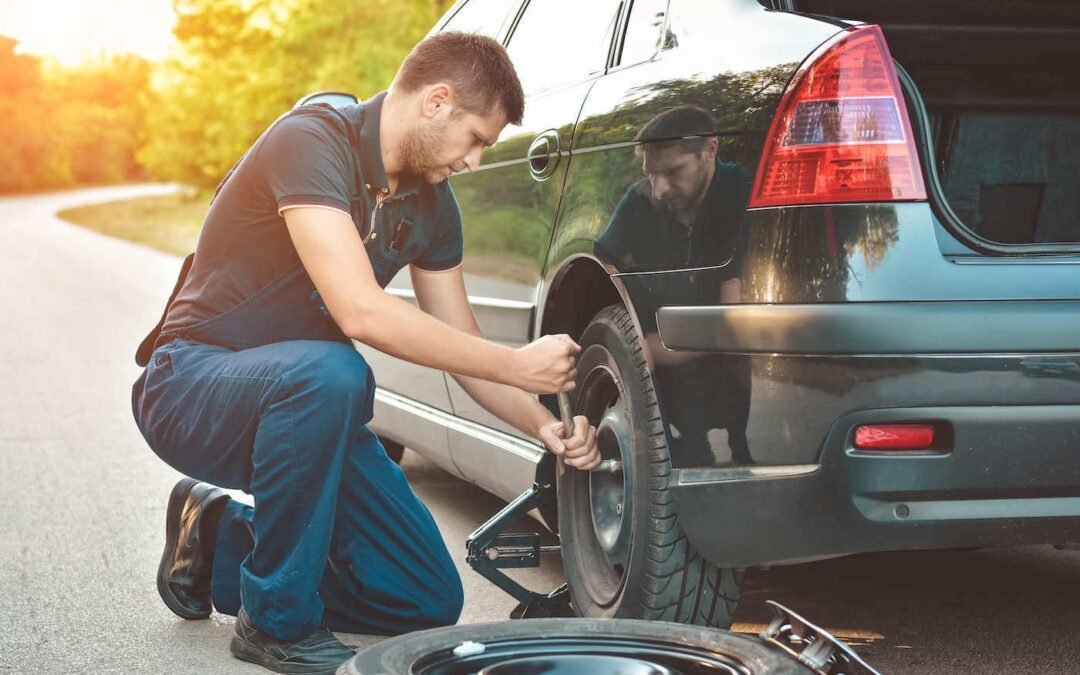
How to Change a Tire Safely in Winter (If You Must)
If you decide to change the tire yourself and conditions are safe, follow these winter-specific steps:
Preparation and Safety
- Park on the most level ground possible and engage parking brake
- Place wheel chocks or large rocks behind tires to prevent rolling
- Turn on hazard lights and set up reflective warning triangles
- Put on high-visibility vest if you have one
- Clear snow from around the flat tire and jack points
- Work quickly but carefully to minimize cold exposure
Changing the Tire
- Loosen lug nuts slightly while tire is still on the ground (don’t remove yet)
- Position jack under manufacturer-specified jack point (check owner’s manual)
- Place a board under the jack if ground is soft or icy
- Raise vehicle until flat tire is about 15cm off the ground
- Remove lug nuts completely and store them in a safe place
- Remove flat tire and place it flat under the vehicle as backup support
- Mount spare tire, aligning holes with wheel studs
- Hand-tighten lug nuts in a star pattern
- Lower vehicle until tire touches ground but doesn’t bear full weight
- Tighten lug nuts fully in a star pattern
- Lower vehicle completely and remove jack
- Do final tightening of all lug nuts
After Installing the Spare
- Check spare tire pressure immediately at nearest service station
- Most spare tires require 60 PSI—much higher than regular tires
- Drive slowly and carefully—most spares are rated for 80 km/h maximum
- Get your regular tire repaired or replaced within 24-48 hours
- Never drive long distances or at highway speeds on a spare
Important: If you notice your lug nuts were extremely tight or you couldn’t loosen them, don’t force it—you risk stripping the bolts or injuring yourself. Call 819-485-0729 for professional assistance .
Winter Tire Pressure Maintenance
Proper tire pressure is critical for winter safety, fuel efficiency, and tire longevity. Here’s how to maintain optimal pressure throughout Gatineau’s winter:
How to Check Tire Pressure Correctly
- Check pressure when tires are “cold”—before driving or at least 3 hours after driving
- Use a quality digital tire pressure gauge (under $20 at most auto stores)
- Find recommended PSI on sticker inside driver’s door frame
- Check all four tires plus spare—don’t assume they’re all the same
- Add air at service stations or use portable air compressor
- Recheck pressure after adding air to ensure accuracy
Winter Tire Pressure Schedule
During Gatineau’s winter months (November through March), check tire pressure:
- Weekly: During periods of temperature fluctuation
- Before long trips: Always check before highway driving
- After major temperature drops: Check within 24 hours of 10°C+ drops
- When warning light activates: Check immediately, don’t ignore it
- Monthly minimum: Even during stable weather periods
Proper inflation improves fuel economy by up to 3%, extends tire life by up to 25%, and significantly reduces flat tire risk .
Understanding Your Spare Tire Options
Not all spare tires are created equal. Understanding what type you have is essential for winter safety:
Full-Size Spare
- Identical to your regular tires
- Can be driven normally with no speed or distance restrictions
- Should still be checked for pressure regularly
- Best option for winter driving in remote areas
Compact Temporary Spare (Donut)
- Smaller, lighter wheel designed for temporary use only
- Maximum speed usually 80 km/h (check sidewall)
- Maximum distance typically 80-100 km
- Requires higher air pressure (usually 60 PSI)
- Not suitable for winter highway driving—get regular tire replaced immediately
Run-Flat Tires
- Reinforced sidewalls allow driving up to 80 km at reduced speed after puncture
- Many vehicles with run-flats don’t include spare tires
- Can’t be repaired after being driven flat—must be replaced
- Still call for service rather than continuing to drive on damaged tire
Tire Repair Kit
- Some newer vehicles include sealant and air compressor instead of spare
- Works for small punctures in tire tread only
- Ineffective for sidewall damage, large holes, or complete blowouts
- Temporary solution—still requires professional repair afterward
Can Your Flat Tire Be Repaired?
Not all flat tires require replacement. Professional tire shops can repair many punctures if they meet specific criteria:
Repairable Tire Damage
- Puncture is in the tread area (center portion of tire)
- Hole is smaller than 6mm (1/4 inch) in diameter
- Sidewalls and shoulders are undamaged
- Tire wasn’t driven extensively while flat
- Internal tire structure shows no damage upon inspection
Unrepairable Tire Damage
- Punctures in sidewall or shoulder area
- Holes larger than 6mm
- Multiple punctures close together
- Tire was driven flat for significant distance
- Visible internal damage or separated layers
- Bulges, bubbles, or deformities in tire
A professional repair typically costs $20-40 and takes 30-60 minutes, while a new tire ranges from $100-300+ depending on size and quality . Always get a professional assessment rather than guessing.
Preventing Winter Flat Tires
Prevention is far easier than dealing with a roadside flat in -25°C weather. Follow these strategies to minimize your flat tire risk:
Install Proper Winter Tires
Quebec law requires winter tires from December 1 to March 15, and for good reason. Winter tires maintain flexibility in cold temperatures, provide superior traction on snow and ice, and feature deeper tread patterns that help prevent punctures . Using all-season tires in Gatineau’s extreme winter significantly increases your flat tire risk.
Inspect Tires Regularly
- Check tread depth monthly (minimum 4mm for winter safety)
- Look for embedded objects like nails or screws
- Examine sidewalls for cuts, bulges, or cracks
- Watch for uneven wear patterns indicating alignment issues
- Replace tires older than 6 years regardless of tread depth
Drive Carefully on Winter Roads
- Slow down when approaching potholes—don’t swerve suddenly
- Avoid driving through deep snow that might hide debris
- Keep distance from snow plows that can kick up sharp objects
- Stay in cleared tire tracks when possible
- Avoid parking areas with visible debris or sharp ice
Maintain Proper Wheel Alignment
Potholes and winter road impacts knock your wheels out of alignment, causing uneven tire wear that leads to premature failure and flats. Get alignment checked if you notice pulling, vibration, or uneven tread wear patterns.
Mobile Tire Change Service: How It Works
When you call Gatineau Towing for mobile tire change service, here’s exactly what happens:
- Immediate dispatch: We send the nearest available service truck to your location
- Real-time tracking: You receive ETA updates so you know exactly when help arrives
- Professional assessment: Our technician evaluates the damage and spare tire condition
- Safe tire change: Using proper equipment, we remove the flat and install your spare
- Torque specifications: Lug nuts are tightened to manufacturer specifications
- Pressure check: We verify your spare tire has proper air pressure
- Towing if needed: If spare is unavailable or damaged, we tow to nearest tire shop
- Transparent pricing: Clear cost quoted before service—no hidden fees
Most tire changes are completed within 20-30 minutes of our arrival. We work efficiently to minimize your exposure to cold and get you safely back on the road .
Frequently Asked Questions About Winter Flat Tires
How long can I drive on a flat tire?
You shouldn’t drive at all on a completely flat tire—even short distances cause irreparable damage to the tire and potentially the wheel. If your tire is losing air but not completely flat, drive slowly to the nearest safe location and stop immediately. Continuing to drive destroys the tire’s internal structure and can damage your vehicle’s suspension and alignment.
Will my tire pressure monitoring system warn me before a tire goes flat?
TPMS typically triggers when pressure drops 25% below recommended levels. This gives you warning for slow leaks, but sudden punctures or blowouts can happen faster than the system detects. Never ignore the TPMS warning light—check pressure immediately when it activates .
Can I use tire sealant products in winter?
Tire sealant aerosols can work for small punctures in emergency situations, but they’re less effective in extreme cold and should only be temporary solutions. Some sealants can make professional repair impossible later. If you use sealant, inform the tire shop immediately so they can clean it before attempting repair .
How much does mobile tire change service cost in Gatineau?
Mobile tire change services vary based on location and time of day, but typically range from $80-150 for standard service. This is significantly less than the cost of tow truck service plus shop labor. Call 819-485-0729 for an exact quote based on your specific situation and location .
Do you provide tire change service in rural areas like Chelsea and Cantley?
Yes! We provide mobile tire change service across all Gatineau areas including rural communities like Chelsea, Cantley, Buckingham, and Masson-Angers. We reach most locations within 30-45 minutes .
What if my spare tire is also flat?
If your spare tire doesn’t have adequate pressure or is damaged, we can’t safely install it. In these cases, we provide towing service to transport your vehicle to the nearest tire shop. Many of our service vehicles carry portable air compressors, so if your spare just needs air, we can inflate it on-site .
Can you help with flat tires on trucks and SUVs?
Absolutely. Our mobile tire service handles all vehicle types including trucks, SUVs, vans, and commercial vehicles. We carry equipment rated for heavy-duty applications. For very large commercial trucks or equipment, we also offer heavy-duty towing services .
Winter Emergency Supplies for Tire Safety
Keep these items in your vehicle throughout winter to handle tire emergencies:
- Properly inflated spare tire (check monthly)
- Working jack and lug wrench specific to your vehicle
- Digital tire pressure gauge
- Portable air compressor (12V plug-in models work well)
- Tire sealant (emergency backup only)
- Flashlight with extra batteries or rechargeable headlamp
- Reflective warning triangles
- High-visibility safety vest
- Work gloves rated for cold weather
- Small board to place under jack on soft ground
- Emergency contact numbers including 819-485-0729
Don’t Risk Your Safety—Call Gatineau Towing
Flat tires are inconvenient anytime, but during Gatineau’s brutal winter months, they can become dangerous situations. Frostbite, hypothermia, and traffic accidents pose serious risks when attempting roadside tire changes in extreme cold. Your safety is worth far more than the cost of professional service.
Gatineau Towing provides fast, professional mobile tire change service 24/7 across all Gatineau areas. Our experienced technicians arrive equipped with proper tools, lighting, and safety equipment to change your tire quickly and correctly—so you can stay warm and safe inside your vehicle.
Flat tire right now? Call 819-485-0729 for immediate mobile tire change service anywhere in Gatineau.
We also provide complete roadside assistance including battery boosts, winch-out services, vehicle unlocking, and emergency towing. Save our number now—winter emergencies don’t wait, and neither do we.