
Why Car Batteries Die in Winter: A Complete Guide for Gatineau Drivers
It’s a frustrating scenario every Gatineau driver knows too well: You turn the key on a freezing January morning, and instead of your engine roaring to life, you hear nothing but clicking. Your car battery is dead. Winter in Gatineau brings temperatures that regularly drop to -20°C or lower, and your car battery pays the price. Understanding why batteries fail in cold weather—and knowing what to do about it—can save you time, money, and serious inconvenience.
If you’re dealing with a dead battery right now, call 819-485-0729 for immediate battery boost and jump start services anywhere in Gatineau—available 24/7.
Why Car Batteries Die in Cold Weather
Car batteries struggle in winter for several scientific reasons. At the heart of every battery is a chemical reaction between liquid electrolytes and lead plates that produces electrical energy. When temperatures drop, this entire process changes dramatically.
Cold Slows Chemical Reactions
The chemical reactions inside your battery slow down significantly in cold temperatures. At 0°C, a fully charged battery loses about 35% of its power. When temperatures plummet to -20°C—common in Gatineau during January and February—that loss increases to 60% or more. Your battery simply cannot generate enough electricity to power the starter motor and turn over a cold engine.
Engine Oil Thickens in Winter
Cold weather doesn’t just affect your battery—it also thickens your engine oil, making it harder for the engine to turn over. Think of trying to mix cold honey versus warm honey. Your battery must work significantly harder to crank a cold, sluggish engine, placing enormous strain on an already weakened power source.
Increased Electrical Demand
Winter driving means you’re constantly using power-hungry features: heated seats, defrosters, headlights during shorter days, and cabin heaters running at full blast. Each of these systems drains power from your battery, adding stress when it’s already operating at reduced capacity. If you’re only making short trips around Hull or Aylmer, your alternator doesn’t have enough time to fully recharge the battery between starts.
Battery Age Makes It Worse
Car batteries typically last 3-5 years under normal conditions. As batteries age, internal corrosion builds up, reducing their ability to hold a charge. An older battery that performs fine in summer may completely fail when winter cold exposes its weakened condition. If your battery is more than three years old, winter is when you’ll discover whether it’s still reliable.
Warning Signs Your Battery Might Fail This Winter
Don’t wait for a complete failure. Watch for these warning signs that your battery is struggling:
- Slow engine crank: The engine turns over sluggishly when you start the car, especially on cold mornings
- Dim headlights: Lights appear noticeably dimmer when idling or before starting the engine
- Electrical issues: Dashboard lights flicker, power windows operate slowly, or radio cuts out
- Check engine light: Sometimes illuminates when battery voltage drops too low
- Swollen battery case: Extreme cold or heat can cause the battery case to swell or crack
- Corrosion on terminals: White, blue, or greenish buildup around battery posts indicates leaking acid
- Battery age: If your battery is over 3 years old, it’s more vulnerable to winter failure
If you notice any of these signs, get your battery tested immediately. Most auto parts stores and service centers offer free battery testing.
How to Prevent Your Battery from Dying in Gatineau’s Winter
Prevention is always easier than dealing with a dead battery in sub-zero temperatures. Here’s how Gatineau drivers can protect their batteries:
Park in a Garage When Possible
Even an unheated garage provides significant protection compared to parking outside. Temperatures inside a garage rarely drop below -5°C, even when it’s -25°C outside. This temperature difference can be the distinction between a battery that starts and one that doesn’t. If you don’t have a garage, consider a carport or parking in a covered area.
Drive Longer Distances Regularly
Short trips around town don’t give your alternator enough time to recharge the battery fully. Starting your engine draws approximately 100 amps of power, but idling for 15 minutes only recharges 3-4 amps. To keep your battery healthy, drive for at least 10-15 kilometers a few times per week. Highway driving is even better because the alternator charges more efficiently at higher RPMs.
Use a Battery Blanket or Block Heater
Battery blankets wrap around your battery and plug into a standard outlet, keeping the battery warm overnight. Block heaters warm your engine oil, reducing the strain on the battery during startup. Both options are inexpensive investments that dramatically improve cold-weather starting. Many Gatineau residents use timers to activate these devices 1-2 hours before starting their vehicles.
Minimize Electrical Load Before Starting
Before you turn the key, make sure everything is off: headlights, radio, heater fan, heated seats, and phone chargers. This allows the battery to dedicate 100% of its power to starting the engine. Once the engine is running, you can gradually turn on accessories as needed.
Keep Battery Terminals Clean
Corrosion on battery terminals acts like an insulator, preventing efficient power transfer. Check your terminals monthly during winter and clean them with a wire brush and baking soda solution if you see buildup. Make sure connections are tight—loose terminals cause voltage drops and starting problems.
Test Your Battery Before Winter Hits
Don’t wait until December to check your battery’s health. Get it tested in October or November, before the first major cold snap. If testing shows your battery is weak or nearing the end of its life, replace it before winter arrives—not during a blizzard at 6 AM.
What to Do When Your Battery Dies in Gatineau
Even with perfect maintenance, batteries can still fail unexpectedly. Here’s what to do when you’re stuck with a dead battery:
Option 1: Jump Start Your Vehicle
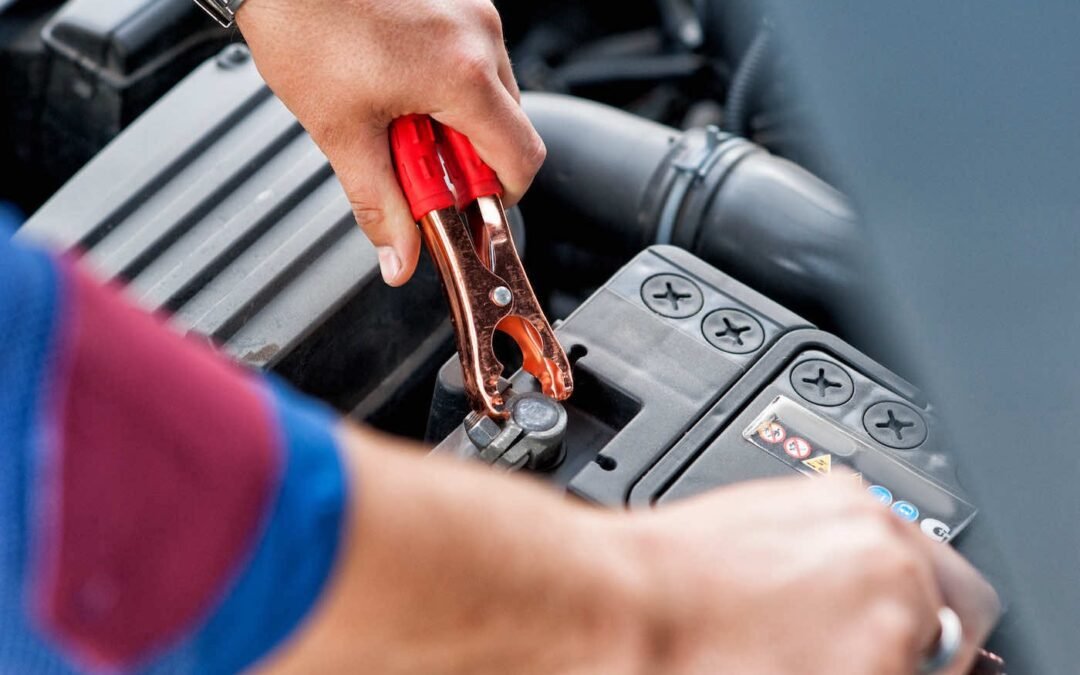
If you have jumper cables and access to another vehicle, you can attempt a jump start. Follow these steps carefully:
- Position the working vehicle close enough for cables to reach both batteries, but don’t let vehicles touch
- Turn off both vehicles and remove keys from ignition
- Connect red (positive) cable to the dead battery’s positive terminal
- Connect the other red cable end to the working battery’s positive terminal
- Connect black (negative) cable to the working battery’s negative terminal
- Connect the other black cable end to an unpainted metal surface on the dead vehicle’s engine block—NOT the battery terminal
- Start the working vehicle and let it run for 2-3 minutes
- Attempt to start the dead vehicle
- Once started, carefully remove cables in reverse order
- Drive for at least 30 minutes to recharge the battery
Important: Connecting cables incorrectly can cause sparks, battery explosions, or damage to your vehicle’s electrical system. If you’re unsure, call a professional.
Option 2: Use a Portable Jump Starter
Portable jump starters are compact battery packs that can jump-start your vehicle without another car. They’re invaluable during Gatineau winters. Simply connect the cables to your battery terminals (red to positive, black to negative), turn on the unit, and start your vehicle. Keep one charged in your car during winter months.
Option 3: Call Professional Battery Boost Service
The safest and fastest option is calling professional roadside assistance. Gatineau Towing provides 24/7 battery boost and jump start services across all Gatineau neighborhoods including Hull, Aylmer, Buckingham, Gatineau Sector, and Masson-Angers.
Our technicians arrive with commercial-grade jump starters and can:
- Safely boost your battery without risk of electrical damage
- Test your battery and alternator to identify the root problem
- Provide towing to a mechanic if your battery needs replacement
- Offer advice on preventing future battery failures
Call 819-485-0729 anytime—we respond quickly, even during major snowstorms.
Should You Replace or Recharge Your Battery?
After a jump start, you need to determine whether your battery can be saved or needs replacement. Here’s how to decide:
When to Recharge Your Battery
Your battery can likely be recharged if:
- You accidentally left lights or accessories on, draining the battery
- The battery is less than 3 years old
- After jumping, the vehicle starts normally on subsequent attempts
- Battery testing shows it still holds a charge
Drive for 30-45 minutes after jump-starting to allow the alternator to recharge the battery fully. Alternatively, use a home battery charger overnight for a complete recharge.
When to Replace Your Battery
Replace your battery immediately if:
- It’s more than 4-5 years old
- You’ve needed multiple jump starts in recent weeks
- The battery case is swollen, cracked, or leaking
- Heavy corrosion covers the terminals despite cleaning
- Testing shows the battery cannot hold a charge
- The vehicle struggles to start even after a full recharge
Don’t gamble with a failing battery during Gatineau’s winter. A replacement costs $100-200, while being stranded in -30°C weather can be dangerous and expensive.
Understanding Cold Cranking Amps (CCA)
When replacing your battery, pay attention to the Cold Cranking Amps (CCA) rating. This number indicates how much power the battery can deliver at -18°C for 30 seconds while maintaining at least 7.2 volts.
For Gatineau’s winter climate, choose a battery with:
- Minimum CCA: Follow your vehicle manufacturer’s recommendation
- Higher CCA if possible: Extra cranking power provides a safety margin during extreme cold
- Example: If your manual recommends 500 CCA, consider 600+ CCA for better winter performance
Higher CCA ratings don’t harm your vehicle—they simply provide more power during cold starts, which is exactly what you need in Quebec winters.
Common Winter Battery Myths Debunked
Myth: Idling Your Car Warms Up the Battery
Reality: Idling provides minimal battery recharge. You need to drive at highway speeds for the alternator to effectively recharge the battery. Idling for 15 minutes only recovers a fraction of the power used to start the engine.
Myth: Batteries Don’t Die in Newer Cars
Reality: Modern vehicles have more electrical demands (computers, sensors, infotainment systems) that actually place greater strain on batteries. Even new cars experience battery failures in extreme cold.
Myth: You Should Replace Your Battery Every Year
Reality: Quality batteries last 3-5 years with proper maintenance. Annual replacement is unnecessary and wasteful. Instead, test your battery each fall and replace it when testing indicates declining performance.
Myth: Jump-Starting Damages Your Car’s Computer
Reality: When done correctly, jump-starting is safe for modern vehicles. The risk comes from connecting cables incorrectly or allowing jumper cable clamps to touch each other while connected.
Winter Battery FAQ for Gatineau Drivers
How cold is too cold for a car battery?
Most batteries begin losing significant capacity below -10°C. At -20°C (common in Gatineau), batteries operate at approximately 40% capacity. Batteries can technically function down to -40°C, but starting your vehicle becomes extremely difficult without assistance from block heaters or battery warmers.
Can I boost my own car battery safely?
Yes, if you follow proper procedures and have quality jumper cables. However, incorrect connections can cause battery explosions, electrical system damage, or personal injury. If you’re uncertain about the process, calling professional roadside assistance at 819-485-0729 is the safer choice.
How long should I drive after a jump start?
Drive for at least 30-45 minutes at highway speeds to adequately recharge your battery. Short trips around the neighborhood won’t provide sufficient charge, and your battery may die again within hours or days.
Will a battery charger work in freezing temperatures?
Yes, but charging takes longer in cold weather. For best results, bring the battery indoors to warm up before charging, or use a battery charger specifically designed for cold weather operation. Never attempt to charge a frozen battery—let it thaw completely first.
Does roadside assistance cover battery boosts?
Many insurance policies and auto club memberships include battery boost services. However, coverage varies by provider. Gatineau Towing offers affordable battery boost services with transparent pricing—call 819-485-0729 for a quote, and we can often work directly with your insurance company.
How do I know if my alternator is the problem, not the battery?
If your vehicle starts after a jump but dies again within minutes, or if dashboard lights dim while driving, your alternator likely isn’t charging properly. Our roadside technicians can test both your battery and alternator to identify the actual problem.
Can extreme cold permanently damage a battery?
Yes. If a discharged battery freezes, ice crystals can crack the internal plates and battery case, causing permanent damage. A fully charged battery is much less likely to freeze—another reason to maintain proper charge levels throughout winter.
Essential Winter Battery Maintenance Checklist
Use this monthly checklist throughout Gatineau’s winter season:
- ☐ Check battery terminals for corrosion and clean if needed
- ☐ Ensure battery connections are tight and secure
- ☐ Inspect battery case for cracks, swelling, or leaks
- ☐ Test battery voltage (should read 12.4-12.7 volts when engine is off)
- ☐ Drive for extended periods (30+ minutes) at least twice weekly
- ☐ Turn off all accessories before shutting down engine
- ☐ Park in garage or covered area when possible
- ☐ Use battery blanket or block heater during extreme cold
- ☐ Keep jumper cables or portable jump starter in vehicle
- ☐ Have 819-485-0729 saved in your phone for emergency battery service
When Winter Strikes, Gatineau Towing Is Ready
Dead batteries happen, especially during Gatineau’s harsh winters. When you’re stranded in a parking lot at Carrefour Gatineau, stuck at home in Buckingham, or broken down on Boulevard Maloney, Gatineau Towing responds immediately with professional battery boost services.
Our 24/7 roadside assistance includes:
- Fast response times across all Gatineau neighborhoods
- Commercial-grade jump starters for reliable boosts
- Battery and alternator testing to diagnose the real problem
- Transparent pricing quoted before service
- Professional technicians trained in cold-weather vehicle recovery
- Towing services if your vehicle needs mechanical repairs
- Direct billing to most insurance providers
Don’t let a dead battery ruin your day or leave you stranded in dangerous cold. Save our number now and call immediately when you need help.
Call 819-485-0729 for 24/7 battery boost and jump start services anywhere in Gatineau.
We also provide winch-out services, emergency tire changes, vehicle unlocking, and complete towing services across Hull, Aylmer, Gatineau Sector, Plateau, and all surrounding areas. Winter emergencies don’t wait—neither do we.